The Sahara. The Mojave Desert. The Namib Desert. Such names conjure up mythical images of rolling golden sand, camels, and epic panoramic views. Desert landscapes have a special mysticism across the medium of the film, with famous titles like Lawrence of Arabia and Raiders of the Lost Ark being filmed in the sands of Jordan, Morocco and Tunisia. Perhaps most recently, Dune: Part Two, starring Timothee Chalamet and Zendaya, gathered a lot of footage in Wadi Rum, a UNESCO world heritage site located in Southern Jordan. Wadi Rum is arguably one of the most commemorated nature reserves in film: titles like Theeb, the first Jordanian film to be nominated for a BAFTA in 2016, have been filmed there, as well as huge studio blockbusters like The Martian and Aladdin.
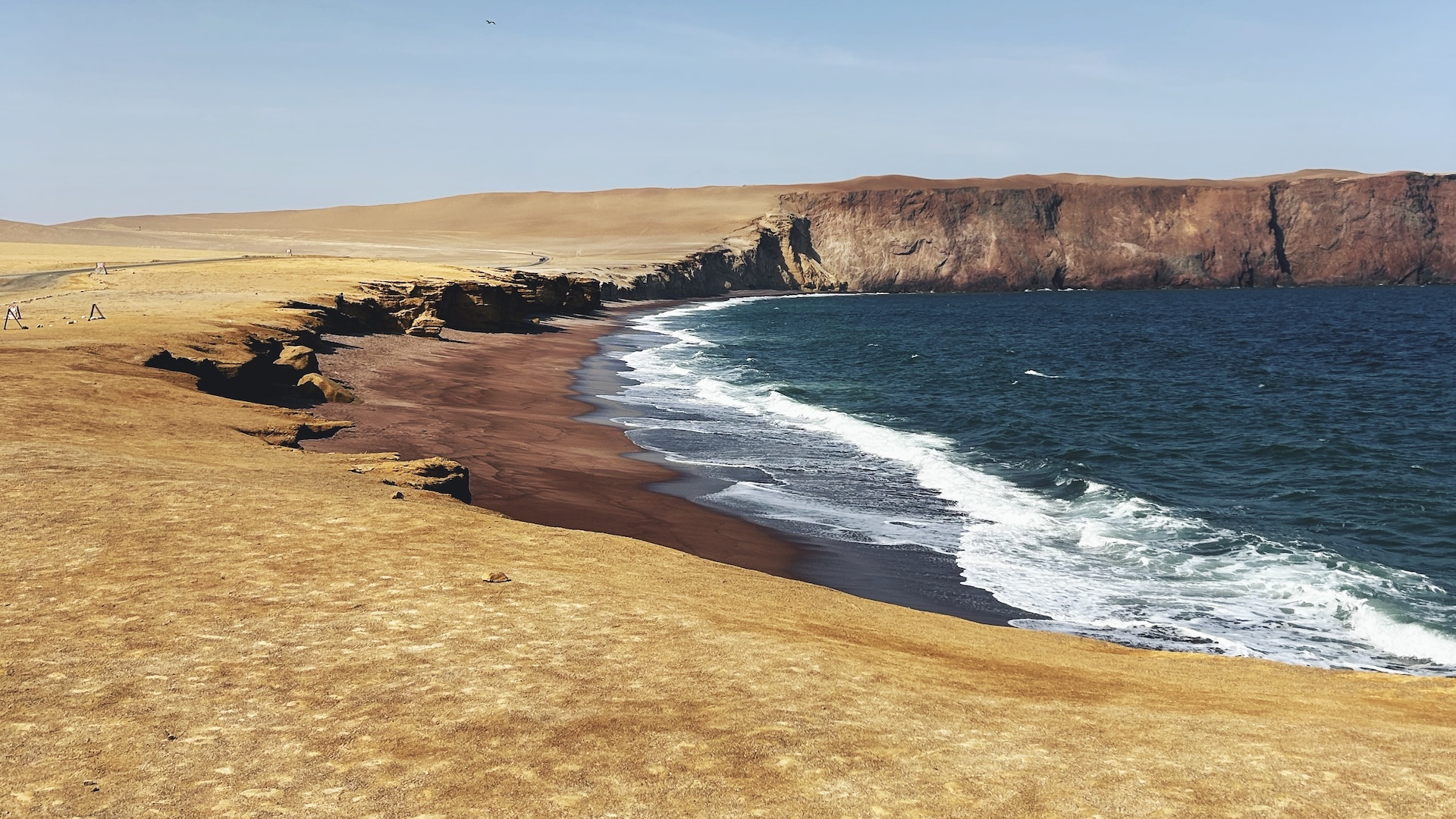
But there’s another UNESCO world heritage site you may not have heard of that is just as mythical as Wadi Rum: and that’s the Paracas nature reserve in Ica, Southern Peru. Beautifully undiscovered, kissed with heat, with a track of only two motion pictures being filmed there (Source: IMDB), Paracas remains a hidden gem, an impressive title in the age of the internet, of obsessive discovery and e-tourism.
I have been to Paracas many times, but each time is like the first. The landscape is so quiet, you can hear nothing but your own laboured exhales. All that exists is stretches of angelic sand, rugged coast, lapping ocean and blue sky. Drive five minutes and the sand is lost: there’s only ocean. Drive another five, and you’ll see a plethora of natural wildlife. The beauty of Paracas (and indeed, Peru) lies within its diversity, its breadth of landscape, which makes it completely different to any country you may have visited before. Even deep in the desert sections of the Paracas reserve, there’s boundless pink lake, rugged coast, boats drifting across perfect, dark blue sea. You can sail between the islands and stare at sea lions and penguins. Each time I step foot in Paracas I experience fresh, acerbic wonder, disbelief. How has no one made a major movie in Paracas? How is it humanly possible that a landscape so diverse, so different, so rich, could be neglected on the screen? If Wadi Rum has been immortalised for its red sand and sandstone rock, how has Paracas not yet been locked into film history for its siltstone, pink ink granodiorite, swathes of ancient, Palaeozoic rock?
It may be the case that Paracas remains unexplored on film because it is a well-kept secret: not enough people in the right places know it exists, and perhaps the ones that do believe it to be inaccessible. It’s no surprise that filmmakers prefer familiar landscapes like Wadi Rum, where the path is well-trodden and the permits have been obtained a hundred times before.
But what’s film without risk?
Don’t we want more? Isn’t the point of making art to be diverse, unwavering, adventurous? To explore?
It remains to be seen whether Paracas will receive its flowers; whether some half-blind, determined filmmaker with a big budget and magnetic sphere of influence will come to Ica and burn Paracas into cinematic history, but perhaps this article will push someone into the right direction. Paracas is easily accessible, a short coach ride from Lima, Peru’s capital city. GoPeru Films have an impressive track record of delivering content in Paracas, with TV shows and commercials being filmed in the region – we know the landscape and we can help your team with every need you may have; equipment rental, permits, location scouting and local crew.
So, filmmakers of the world, the next time you recognise the sands of Wadi Rum on your TV, maybe one late night with a cold beer in hand and you involuntarily draw in breath at that beautiful Middle Eastern sand – think about what you’re seeing, and how many times you’ve seen it before. Because those tiny mists of sands you see, ghosting across the screen? The strong desert winds? In Peru, they have a name for that… Paracas.

Leave a Reply